
Two Fish
On agency and attention, written with one eye on the basket and one eye on my own limits

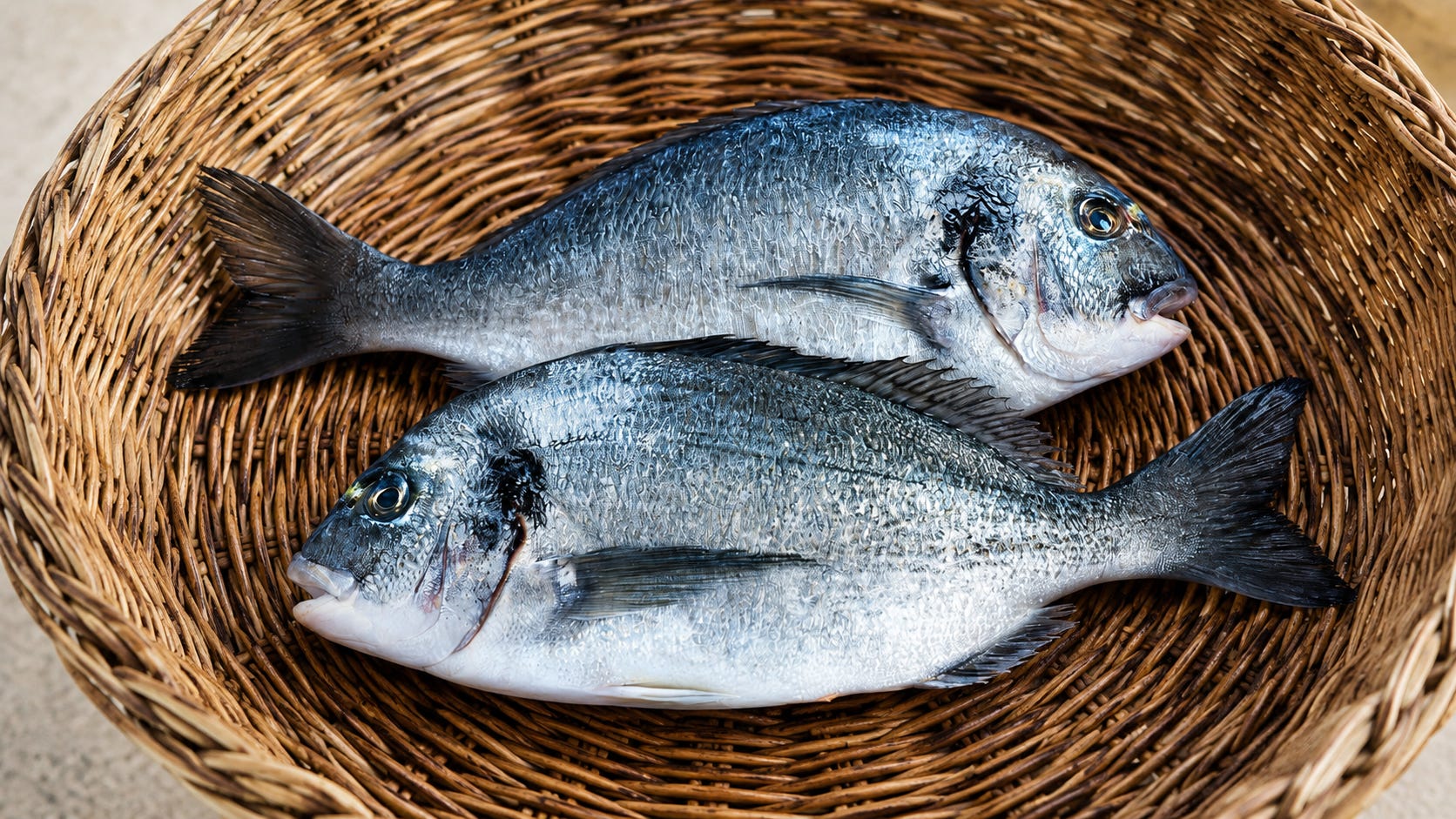
There comes a time when I have to choose who gets the fish. Or who gets the medicine. Or who gets the last seat in the truck. Or who gets funding. Or who gets the next hour of my attention?
Or …. who gets taught how to fish ….. which is a much longer and slipperier fish than a fish!
The fish themselves are simple enough. They have scales. They have eyes. They are sitting in a basket looking more spiritually advanced than I am.
The trouble in my mind and heart arises when there are two fish left and five people want them.
That trouble grows whiskers when fifty people say: “I do not only want a fish. I want to learn how to fish!” And I, holding my little basket of time, realize that teaching someone to fish also takes some …. gosh-darn ….. fish!
Not the swimming kind. The attention kind. The patient kind…. (very patient)
The kind that listens without contempt when the knot is wrong for the seventh time. The kind that watches someone cast badly into a tree and does not turn them into a joke. “That was our last hook …… Oh shhhhhiiiiitttt……” .. etc.
The kind that knows the lake, the weather, the boat, the hook, the story of the place, and the trembling pride of the beginner. The kind that remember … “oh, right … I’ve been there before….”
“Give a person a fish, and perhaps they eat today. Teach a person to fish, and perhaps they eat tomorrow….”
The old proverb has become less fun for me. Darn ….
But teaching fifty people to fish requires time, nets, mistakes, safe water, someone to watch the children, someone to maintain the boat, someone to repair the hooks, and someone to decide who learns first without accidentally recreating the exact unfairness of scarcity I want to escape.
Let me take a moment for the wise fishing teacher who sits in abundance and dreams of teaching the whole world! Who ….. even after training trainers of trainers, training ten more to train ten more, in exponential catalytic orgasmic glory …. SOMEHOW forgot to protect the breeding grounds of the fish!! ….. oh with best intentions … and now there are no more fish.
Ohhh ….. there is a lot there in teaching how to fish. …..
I am not sure I know how to do that.
Right this moment I am remembering that hunger is not an abstraction…..
oh …. “Hunger is the worst illness.” and how can we forget it?
“Scarcity captures the mind.”
I think this is where the game begin.
Starting with the bad crappy little games
//Game 1.//
The first tempting game is auction.
Two fish. Five people. Highest price wins.
This has the charming brutality of a very sharp knife. It slices it dices! … It is quick. It is clear. It is easy to defend if one has already decided that price is the proper language of hunger and care. (…have we?)
But come on … it flattens the whole world. The child’s hunger becomes a bid. The elder’s slowness becomes weak demand. The caregiver’s burden becomes insufficient liquidity.
The person who helped everyone yesterday but has no cash today becomes, in the ledger’s tiny glass eye, simply …. unable to pay.
(“come back when your hunger has become purchasing power.” … the auctioneer might feel justified to say …. in such a bad little game world.)
So yes in that world … the fish go to the highest purchasing power, and then someone may announce that the market has spoken, as though the market were a wise grandmother rather than a rule we chose.
//Game 2.//
The second tempting game is first come, first served.
This one wears a cleaner shirt. Very clear white-collar.
It says: no favoritism, no arguing, no complicated judgment. The first two people in line get the fish.
But first come, first served has its own hidden gods: speed, proximity, free time, transport, inside information, and the ability to wait without being needed somewhere else. (the clean shirt has some very smelly armpits)
Spending a day in my shoes and you will know people show up late …. ! Karibu.
A mother nursing a baby arrives late. An elder arrives late. A worker arrives late. Someone ashamed to push forward arrives late. Someone who is washing their hair …..eh-hem... arrives late.
And the rule says: so bad so sad …. but fair.
I am beginning to distrust rules that sound fair before they have looked at the people standing in front of them.
….. first-mover advantage is a real structural effect!
also … “There is no fire like greed!”
The fish are teaching me about attention
At some point I notice the fish have become my inbox.
Two fish.
Five to Fifty requests each day.
Some are beautiful requests. Some are confusing. Some are urgent. Some are disguised as urgent because the sender has also been captured by someone else’s urgency machine.
A funder asks for a report. A neighbor asks for help. A child asks me to look. A friend asks for care.
oh … A student asks to learn! A protocol needs documentation. A game needs testing. A community needs follow-up.
My body asks to sleep, which I often treat as an unreasonable stakeholder…..
If I auction my attention, it goes to whoever pays. (Crap, if this is all I can do...)
If I use first come, first served, it goes to whoever entered the inbox first. (Sorry for the late reply!)
//Game 3 and onward.//
If I use loudest voice wins, it goes to the most dramatic notification. (You know who you are!)
If I use guilt, it goes to whoever can make me feel most responsible for their suffering. (ooof)
If I use excitement, it goes to the shiny thing, which often arrives wearing a little hat and carrying a drum. (Ohhhhhhhhhh shinny!)
I have NOT solved it folks. (is it solvable really?)
I am frequently outwitted by the drum. (while I do my best to dance.)
I think attention is not just a private resource. It is a commons inside the body (and between many bodies). When I spend it badly, others feel the consequences. When I hoard it, things wither. When I scatter it, nothing is watered long enough.
“Heedfulness is the path to the Nirvana,” says one old translation. I receive that, today, mostly as a gentle embarrassment while remembering that … “a wealth of information creates a poverty of attention.”
(a full mind is not mindful)
so .. teaching someone to fish is not a magic escape hatch
I was taught …. “The gift of Dharma surpasses all gifts.” and that “what a learner can do with help today, they may do independently tomorrow. “
Oh … I used to love the teaching-to-fish proverb so much more than I do now…. (I am nostalgic of my righteous bliss)
Well … I still love it a little. It has a good vibe anyway. But I trust it less when it is used to avoid feeding someone today. Teaching (and delegation in general) takes time. Teaching takes attention.
This is where “teaching to fish” starts landing in a pool of commitments. I begin to relax where I can see the commitments, limits, roles, capacities, time windows, evidence of learning, and repair when someone is left out.
I keep coming back to these other games: pools …. stewarded agreement surfaces.
Fifty students and one small boat
Now I imagine the scene more clearly. I am at the lake in the morning and there is a beautiful sunrise. I can see and hear sparrows in murmuration hunting for insects on the surface of the water.
I expected five … yet there are fifty people who want to learn.…. and there is one small boat.
The boat looks at me with the exhausted expression of a nonprofit operations manager.
I could take the richest first.
ohh…. Bad game Will!
I could take the loudest first.
Lame …..
I could take whoever signed up first.
Maybe useful, but very suspicious.
I could take the people I like most.
Very human. I know them right? Dangerous.
I could take the people who already know enough that teaching them will be easy, and then claim success.
This is a very common trick in education and development. Choose the almost-ready, teach them a little, celebrate impact, and quietly avoid those who needed the most careful attention.
I have tricked myself into version of this too many times without noticing. … Now noticing …. oush…..
Ode to the allocation mechanism!
So then … I try to imagine a gentler allocation.
Maybe the first boat holds: … lets count. . . .
one person with urgent household need, one person likely to teach others, one quiet person who has been excluded, one person who maintains the nets, one young person who will bring joy to the whole thing, and one elder on shore who refuses to get in the boat but knows when the weather is lying.
Is that enough .. is it an ecosystem of glorious diversity now…. !?
And has the the teacher become - no longer the heroic fisherman … but a steward of healthy conditions?
This feels closer to the games I want to play. …. yet …. it’s not about allocation is it?
…. it is being connected to a pathway that can move the right resource to the right place at the right time. (Breathing)
Oh …. “May all beings be at ease.” ….. learning in communities of practice is not just allocation … or information transfer; it is “a process of social participation.” (Breathing some more….. whoosh)
The terrible comedy of scoring needs
It is so tempting to make hard, very intelligent scores.
Urgent hunger: +10.
Has children: +6.
Can teach others: +4.
Recently received fish: -3.
Has beans at home: -2.
Made me feel guilty: suspicious variable, currently unmodeled.
WOW! You got a score of 15!!!!
Look at my scoring method!
I feel clever! … .Lets add 1 Million more parameters! yaaaa!!! High-five you did it!
….. and slightly haunted.
The score can help me notice what I might forget. That is good.
…. But the score can also become a tiny bureaucrat with wet shoes. It may start ranking people faster than I can love them. It may reward visible suffering.
It may miss dignity. It may punish the person who has learned not to ask.
It may turn need into theater. (ohhhhhhhhhhhhhhh that does happen )
It may turn teaching into stale meaningless certification.
It may turn community into queue management.
Did you hear that? (Oh that’s Nguyen tapping on my window)
A score begins as a tool. Then it becomes a target. Then it becomes a way of being.
Nguyen’s “value capture” names the danger of simplified versions of values coming to dominate practical reasoning.
I do not want to abandon scores. I am building scores all the time. Vouchers, receipts, value indexes, limits, fulfillment rates, trust signals, game points. I am not outside the scoring world, standing in robes on a hill. (well I do often wear robes on hills… yet scoring is still happening….)
… but generally … I am in the mud with a spreadsheet …. composting my own manure (for real folks, try it…).
So not to do away with scoring…. A smaller and harder hope is that the score stays humble …. here is one lantern, not the sun? And here clearly is my own finger pointing at the sun or moon…..
score check: Can it support discernment without replacing it? Can it help me explain my decision without pretending I have seen the whole?
Nguyen’s work warns that simplified values can come to dominate practical reasoning. ….this warns me against accepting something merely by tradition, inference, or authority; it asks me to examine what leads to welfare and happiness.
The fish seller is not a prop!
Just a moment here …. There is another person I keep almost always forgetting.
The seller. Who is sometimes me and sometimes not me.
Either way, but especially when it is not me …. forgetting them is embarrassing because they are literally holding the basket of fish.
If it is decided the fish should go to the hungriest people, but the seller is not settled, I have not solved the problem. I have moved the problem into her body, my body, someone’s body.
Perhaps she needs school fees. Perhaps she needs fuel. Perhaps she must repay someone for the boat. Perhaps she has her own hungry children.
Perhaps she is generous and tired of everyone turning her generosity into (#$*&$#@) policy!!!!!
A community can become very noble with someone else’s fish!
(Geeeez folks …. I am looking at you all right now! Ha!… oh and …. I must include myself in that warning …. darn...)
So let’s separates two things that markets often collapse into one: Where should the fish go? And How should the fisher be honored?
Cash markets often answer both at once: whoever pays gets the fish, and the seller is settled. (Clap …. done with Game 1.). That is sometimes useful. But under real need, it can be horribly cruel and short sighted. (right?!)
/~/
My neighbors lets me imagine something else.
Today … the fish may go to the household with urgent need.
The seller may receive settlement through vouchers, pooled credit, future labor, a community kitchen, a food fund, or another accepted commitment.
This is not a fantasy of free fish. It is a core part of my search for better routing.
A Cosmo-Local credit framing says the shared goal is to increase settlement of real-world commitments while preserving care, fairness, and resilience across distance and time.
The seller’s settlement is part of care. The hungry person’s nourishment is part of fairness. The system’s ability to do this again tomorrow is part of resilience.
Generosity as I understand it is not only about giving things away; it is a training of relationship. How can I be “a person responsive to requests… who delights in giving alms.”?
Ostrom’s commons work is often read as a warning against one-size-fits-all rules; commons research notes that design principles are associated with
….. long-term survival of resource systems.
Not props….
Fish in Cellular networks
Now I bring the fish into a video game, because apparently I cannot leave fish alone today. (….EPA and DHA omega-3 fatty acids)
Imagine a little cellular puzzle world.
One cell has two fish units. Five neighboring cells request fish.
One cell is starving. One cell can feed three dependent cells. One cell has another food route.
One cell has received fish recently. One cell is hoarding fish behind a cheerful smile.
The simple arcade version says: move fish fast, get points.
The game I want says: move fish wisely, and then doubt yourself a little.
The player sees why the fish moved.
Fish went to Cell A because its need was urgent and it had no substitute.
Fish went to Cell C because it could nourish others.
Cell B moves higher in tomorrow’s queue.
Cell D already had fish or beans.
Cell E was hoarding and now needs repair, not reward.
But then the game does something important.
It shows the seller-cell. The seller-cell is now strained.
The player says: ohhhhhh.
The game says nothing … very smug.
The player must now route settlement back to the seller-cell (or the fish breeding grounds) before the whole circuit becomes brittle.
That is the little flash of learning I want. Not “I solved scarcity.”
More like: “I made one careful choice, and now I see the next.”
This is why I like games. They let me practice being wrong at small scale.
I have heard the Buddhist concept of dependent origination is often summarized as, “When this exists, that comes to be.” … commitment-pool routing similarly treats settlement as guarded movement (that comes to be) through curation, valuation, limits, and exchange, not just transfer.
When I do not know
Here is the part I do not know how to avoid. Seems un-avoid-able ….
At some point, the fish spoil. At some point, the lesson must start.
At some point, attention must land somewhere. (Here you are right now choosing to read this.) Humility does not remove the choosing.
If I say, (or tantrum) “I do not know enough to decide!!!!!” that may be honest. … but crap …. It may also be abandonment wearing a thoughtful scarf ….…
If I wait for perfect information, the fish rot, the boat leaves, the child goes hungry, the student loses courage, the seller walks home, and my inbox becomes compost of a less useful kind.
So I choose. Each moment ... (Oh in each breath - the prayer of patient abundance and sage advice from close friends).
I hope to choose slowly enough to see something. I hope to choose clearly enough that others can question me. I hope to leave a trace of why I chose. I hope to notice who was harmed. I hope to repair. I hope not to confuse my little rules with wisdom. I hope the people around me help me see what I missed! (Hey folks. I need you… so much!)
And I hope, when there are fifty people wanting to learn to fish, I find delight and joy and I remember to help form a practice: learners helping learners, elders watching weather, fishers being settled, children being fed, mistakes being forgiven, and the lake not being emptied by our enthusiasm. Help me get a fire going on the shore of the lake to cook the fish so that we can together, sing and dance!
Sometimes that feels like a lot to ask from the two fish in my basket.
But fish have always been suspiciously good teachers.
…. yes, let’s test what leads to welfare and happiness…. knowing that decision-makers in bounded rationality can’t optimize from total knowledge; they act under limits of information, attention, and time.
My current practice
I do not have a final rule. I have a basket with two fish and I have some questions.
Who is hungry now? Who has no substitute? Who can help others eat? Who brought the fish? Who has been waiting? Who is invisible to this rule? Who is learning? Who could teach soon? Who needs attention today so they are not lost tomorrow?
What can be pooled? What can be cooked into soup? What can be delayed without harm? What must not be delayed? What did I miss?
…no commandments or maxim today please!
…. more like small stones in my pocket or prayer beads on my wrist.
I touch them when the day becomes too loud and I repeat a simple mantra … “Om Tare Tuttare Ture Soha.” and breath.
Two fish. Five people. Fifty students. One lake. One tired teacher.
One seller with her own life. One community trying to see itself without flattening itself into price, speed, noise, or a clever score.
I-do-not-know the whole picture – I’m in the picture darn it!
Still, the two fish are here in this moment.
“Notice when your attention feels scarce Will!”
Still, someone is hungry. Still, someone wants to learn. I can hear my stomach now as I type … I have not eaten in some time…. So I listen as best I can.
/// another game.
I am holding two fish, fifty requests, one tired nervous system, and several incomplete theories.
And still, I am holding blessings.
The blessing of seeing choices in front of me.
The blessing of not choosing alone.
So I listen, choose, leave room for correction, and try again tomorrow.
And tomorrow…. when the storm has passed and the lake is kind , maybe we learn how to become the kind of people who can decide together
… what fish are for.
They look similar to Black Bream in Tasmania.