
Touching the Knowledge Commons
From circles to synapses: a living network for teaching, healing, and truth

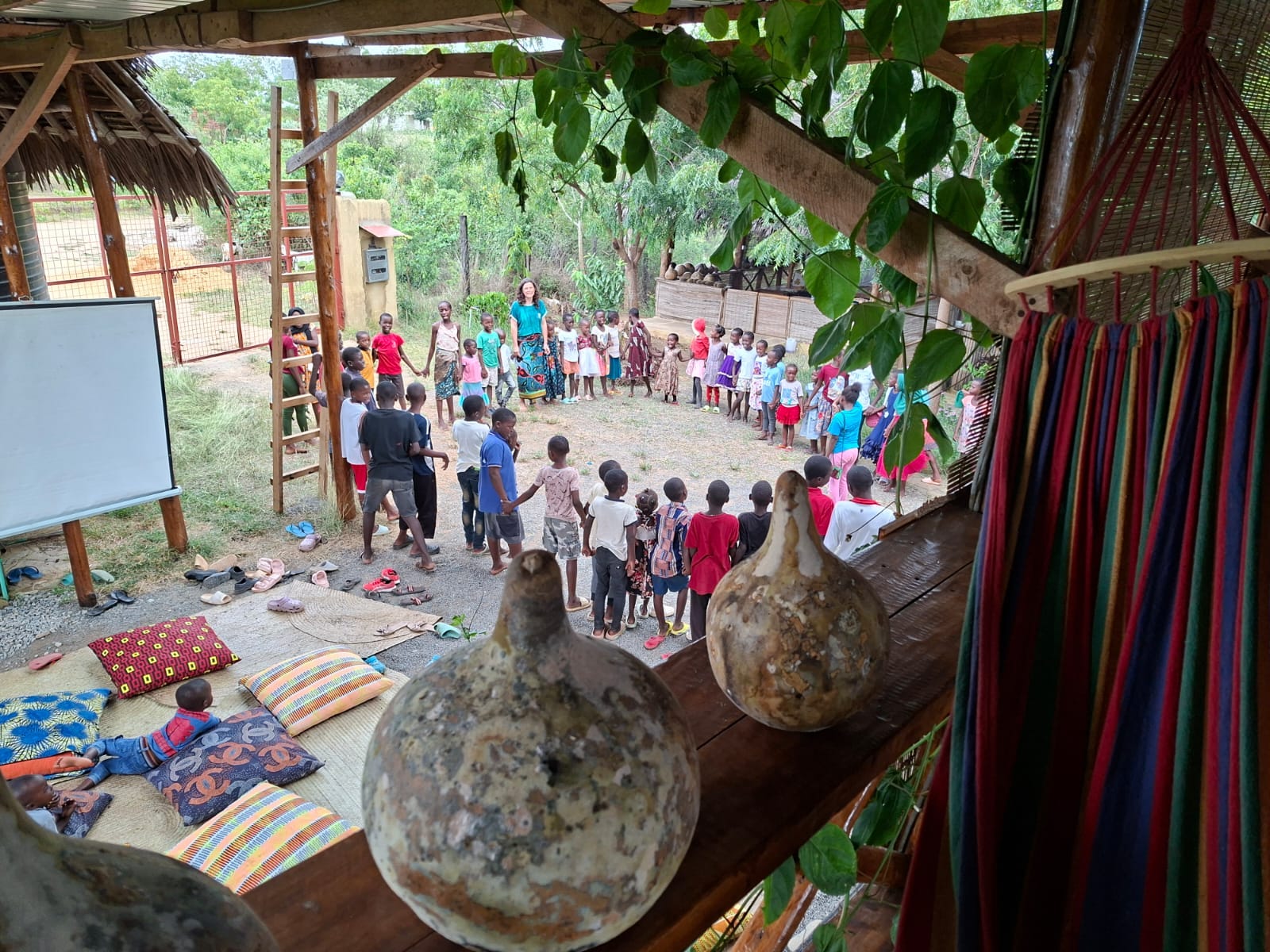
Today at our home and our training hub, Mnyumbuni, two new groups (one men’s and one women’s) sat in circle with representatives from the four other Mweria groups in our village. We played games, sang, ate together, and planned. In the visionary process, everyone was heard and honored. The room carried that simple medicine of care: to look after others, to be looked after, and to feel like you belong. And then it clicked - commitment pooling wasn’t theory. It was felt. Pooling our resources, including our teaching, multiplies everyone’s ability to learn, heal, and provide. That is the commons, alive.
Commitment pooling is simple: we make clear promises to one another - time, mentorships, apprenticeships, care, materials, and shared knowledge—and place them in a common well. We draw from that well when needed and reseed it after: hosting peer circles, opening new apprenticeships, or publishing what we’ve learned into the commons. Education becomes livelihood and relationship, not purchase and debt.
Education works best as a commitment, not a commodity. When promises are visible and rhythmic, teaching and learning become reciprocal by design. People place clear commitments into a shared well and receive support; those who draw also reseed - hosting peer practice, opening apprenticeships, publishing notes, films, and guides. Wisdom circulates through the commons instead of being fenced behind credentials.
A single pool is like a synapse - it can surface fulfilled promises, but it can’t, on its own, test competing claims or correct false intuitions. Stories of trust can generate deep wisdom - and, if unexamined, shelter pseudoscience. A brain of pools changes that. When many pools federate - linked by trust, diverse commitments, and feedback - they create conditions for deeper inquiry. Hypotheses can circulate, be tested across contexts, and be corrected as patterns emerge. A lone pool can carry a “detox” claim; a network of pools comparing outcomes makes it easier to see what regenerates and what corrodes.
Example:
It means an isolated community (one “pool”) can adopt and circulate a health/wellness claim without enough outside comparison to test if it actually helps or harms.
A small festival pool posts a commitment: “7-day charcoal–herb ‘detox’ restores energy.” Participants report “feeling great,” so the pool keeps funding it. Because the pool is alone (no cross-checks), placebo effects and side effects (e.g., constipation, nutrient interference) aren’t surfaced. In a federated network of pools, the same protocol is logged elsewhere with simple outcomes (sleep, energy, adverse events). Patterns show no consistent benefit and some harms, so the network down-ranks or retires the claim.
The scientific method isn’t foreign here; it is relational discipline. Controlled experiments, shared protocols, documentation, and peer review are pooled commitments: we promise to test carefully, record what we see, and invite scrutiny. Made visible in the pool, these promises reinforce rigor just as reciprocity does. Observe and experience. Ask better questions. Log data, witness together, publish artifacts. Analyze, conclude, verify. Then let other pools repeat or adapt. That’s how knowledge stays alive and grows.
We’ve seen this before. Du Bois’ data visualizations and medical abolitionist networks looked like epistemic commitment pools (thanks to Ron Eglash for the nudge) …. collective promises to test, record, and share knowledge for liberation, not just publication. The tragedy is how often communities were stripped of both method and memory … an extraction of knowledge itself. Recovering epistemic and economic pools is one work: regeneration of truth and livelihood together.
This is why festivals, universities, and training hubs belong in one living system. (Thanks Cari Taylor for the reminder) Universities give continuity and depth. Hubs like Mnyumbuni offer practice and place. Festivals catalyze participation and fast iteration. Commitment pooling weaves them into a shared metabolism. We’ve run train-the-trainers, piloted university cohorts, and prototyped at festivals. What remains is a simple rhythm: seed → support → reseed → rotate … the Mweria of the next hands and the next season.
The mechanics are human and clearer and clearer. Everyone contributes a Commitment - who, what, how much, by when.
• Teachers/practitioners: apprenticeships, care circles.
• Learners: practice hours, peer hosting, a capstone, a return-gift to the pool.
• Organizers/allies: space, documentation, facilitation; seed without dominance; match reseeds.
Relational memory stays light but real: short logs; peer/elder witnessing; published artifacts (guides, meditations, designs, films). Guardrails: Consent, pacing and caps, non-extractive sharing with cultural protocols.
Next month we’ll embody this at the Kisima (Wellness) Festival by generating a Kisima Well - a live commitment pool. All participants and practitioners receive KISMA tokens on simple NFC wristbands. Anyone can use sarafu.network to contribute their own commitment into the Kisima Well: teach a skill, host a circle, offer bodywork hours, co-create a community guide. Participants use KISMA vouchers to access those offerings. Practitioners receive communal credit when commitments are fulfilled and can swap credit for others’ work - mirroring Mweria among the Girima tribe here. Village elders will guide with story and music. Ritual holds the rhythm; logs, witnessing, and shared artifacts hold the empirical trail. The festival becomes a seasonal university where knowledge circulates. If you are in Kenya - don’t miss this festival!
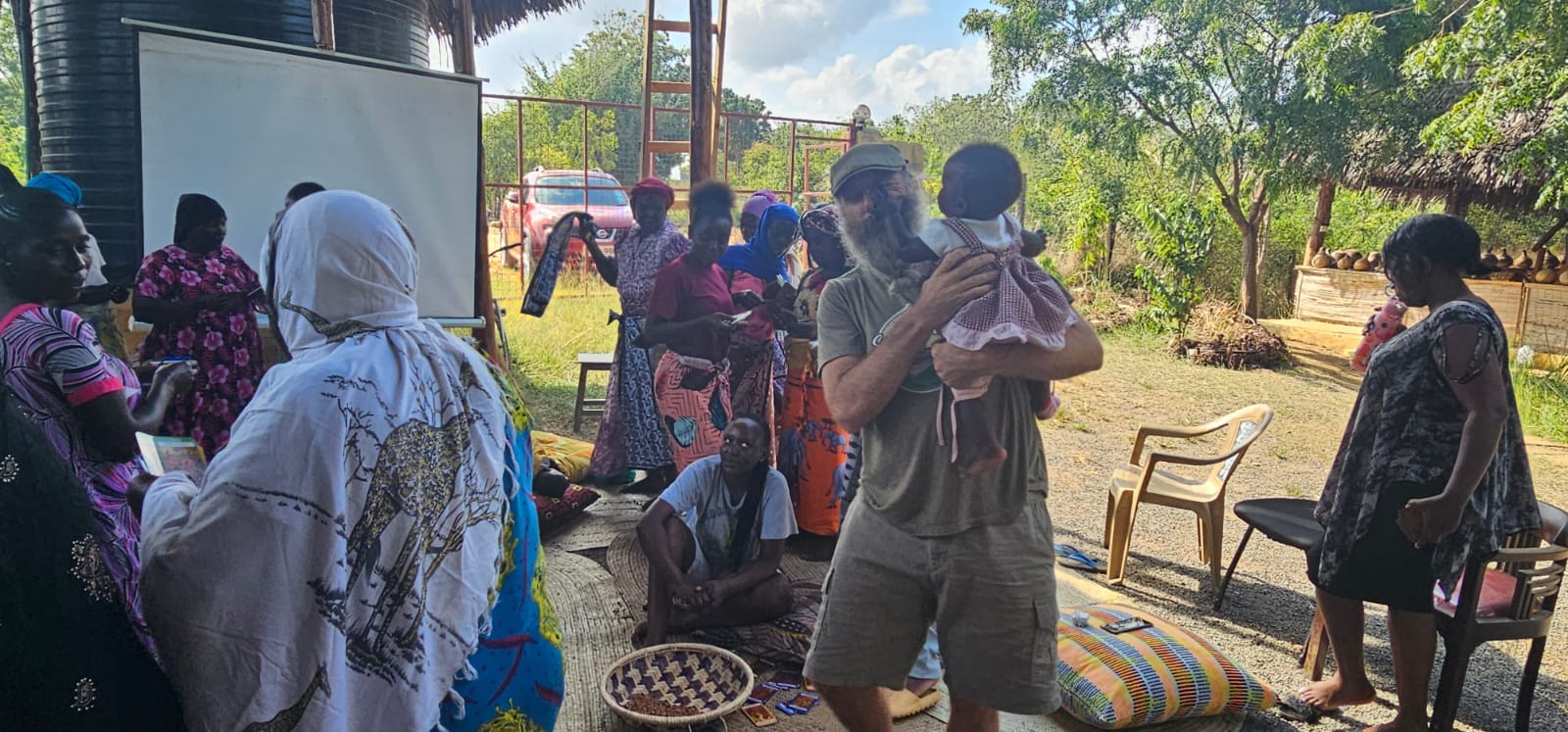
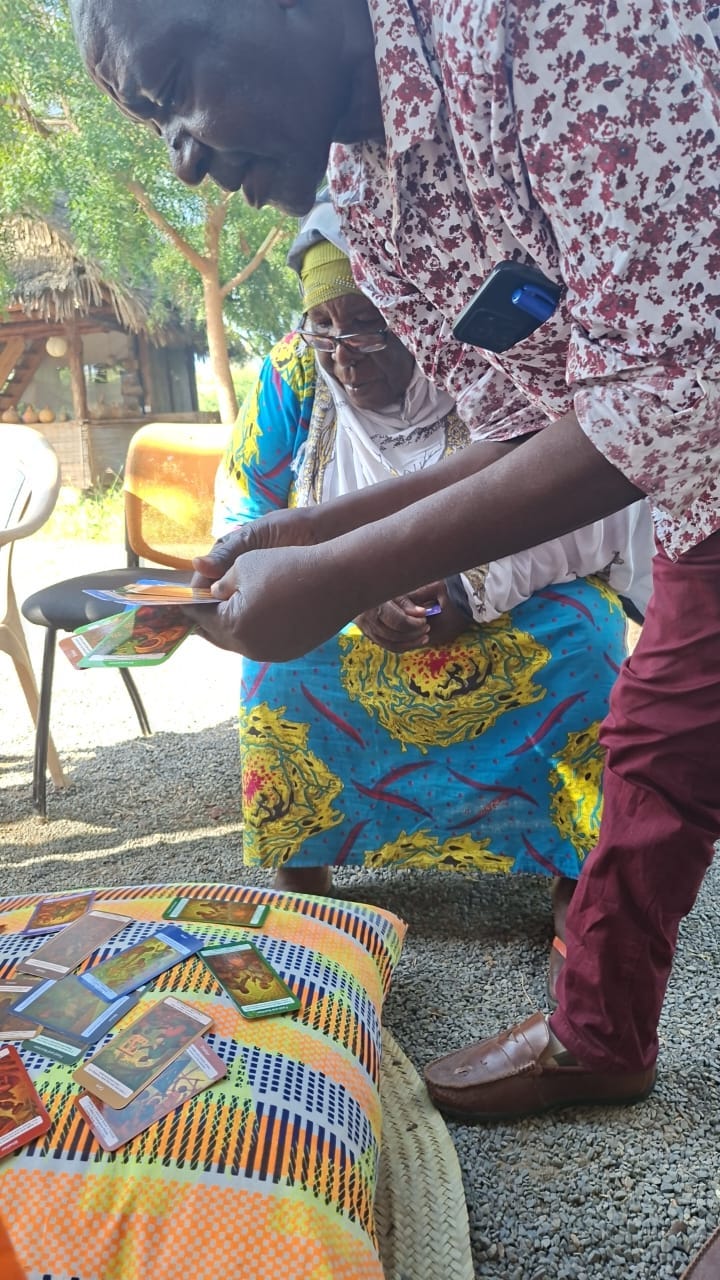
At Mnyumbuni we’ll keep seeding these wells: community currency design, commitment-pool practice, and field immersions where health practitioners, yoga teachers, builders, artists, and scientists can pull from trainers’ resources and give back to the knowledge pool. The point isn’t abstraction; it’s care you can feel - the joy of a room of neighbors realizing their shared commitments change what’s possible.
Pooling isn’t only economic; it’s epistemic - it gives form to the economy of the home that is knowledge. As ecological and social pools federate into a commons that resists capture, epistemic pools federate into a living brain where stories are tested, knowledge evolves, and trust is both emotional and empirical. This is the frontier: weave epistemic and economic pooling so the same mycelial network routes care, livelihoods, and truth-testing.
We’re dancing among the economics of labor and materials to the economy of knowledge. A single pool helps a circle keep its promises. A network of pools helps a world learn which promises heal. Today’s circles converging at Mnyumbuni reminded me: when people belong, rigor and reciprocity are not in tension - they are the same pulse. And when that pulse is shared, from home to hub to festival, the wells don’t run dry. They deepen.
oh this is going to be an enormous ride!!
Nice!!
"A lone pool can carry a “detox” claim" -- pretty sure no one else reading this knows what you meant by that....