
On Guilds
Commitment Pooling Everywhere

This is a fun article, not me pretending to be a grand historian of Europe. I do not focus on European history enough to speak with the confidence of someone who has spent twenty years inhaling parish records in a dusty archive.
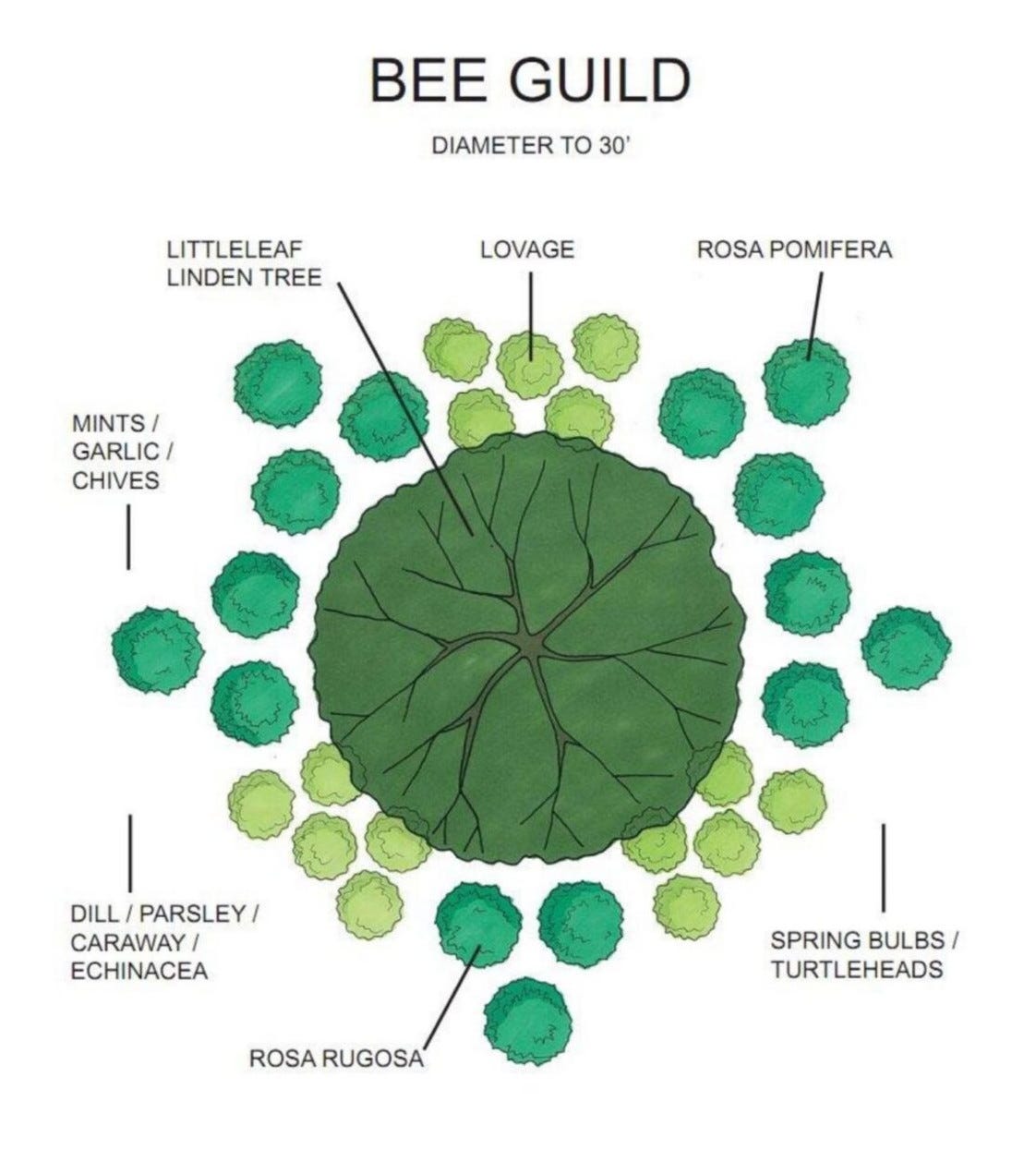
But recently I kept hearing Aude Peronne, in full Druid form, talking about plant guilds (which I will come back to at the end). And having played enough Dungeons and Dragons to know that any town with a guild hall probably also has intrigue, side quests, and one very annoying steward with a ledger, I thought: dammit, what is going on with guilds?
And then I remembered, for some reason, that Oxford had dozens of them, or at least a dense little ecosystem of companies, fraternities, and trade bodies. So here are some brief, hopefully enlightening, and mildly quirky notes on guilds. (mostly drawing from Oxford guild records preserved in the Bodleian Libraries )
Also, when I say “guilds” here, I am bundling together several related things ... craft companies, merchant bodies, fraternities, journeymen groupings, and civic corporations. That is a simplification, but a useful one for this sketch.
At the simplest level, these were local clubs for specific types of work.
…. But that description is too soft if left alone. Guilds were also legal-political corporations, status hierarchies, and exclusion devices as well as mutual-aid structures.
Tailors. Cordwainers. Mercers. Grocers. Butchers. Poulterers. Glovers. Shoemakers. Smiths. Bakers. Barbers. And, because human beings can never leave well enough alone, they were also about hierarchy, morality, reputation, discipline, care, and conflict.
And of course, if you have read my articles often enough, you know what I am about to do.
I am going to notice commitment pooling in and among guilds.
That is my interpretive lens, not their own vocabulary. I am not claiming an Oxford tailor in 1600 would have described his company as utilizing a commitment-pooling protocol. But I do think guilds stewarded multiple overlapping pools ... of assets, obligations, permissions, skills, status, mutual aid, and enforceable promises. Some of those pools were protective and nourishing. Some were disciplinary and exclusionary. Usually they were both.
So let’s start with the books.
In medieval England, split tally sticks were widely used to record debts and exchanges, and Oxford guilds almost certainly lived inside that accounting culture, even though I have not yet found a direct source showing a specific Oxford guild using them. That part is context, not proof.
What is directly attested for Oxford is that guilds tracked obligations through a mix of account books, ordinances, minute books, election books, wardens’ books, receipts, apprenticeship paperwork, and the common chest.
So, probably not “invoices” in the modern corporate PDF sense.
But very much records of who owed what, who was allowed what, who had broken what, and who had paid what.
One major kind of debt on those books was not cash at all. It was service owed. Apprenticeship in England was organized around indentures and recorded terms of service, so one person might owe years of labor and obedience long before anyone talked about a bank account. Another kind of debt was dues and fines. Another was the duty to show up, obey orders, and remain in good standing. Another was the guild’s own obligation to protect members’ privileges.
And yes, there was also a shared treasury. We know that Oxford guilds could use a common chest, and that at least in one case a journeymen’s common chest was deposited with a town bailiff for safekeeping after a dispute. That is one of my favorite little details because it tells us three things at once. First, they had a pooled fund. Second, control over that fund mattered. Third, when conflict hit, civic officers could step in as custodians. Medieval escrow, Oxford edition.
So my best reconstruction is this:
Oxford guilds likely tracked credits and debts through books kept by wardens and company officers, recording dues, fines, receipts, chest balances, apprenticeship contracts, membership decisions, and disputes. Larger or contested obligations could then be backed by civic custody, arbitration, or court process rather than by some clean modern invoice-and-payment workflow.
In commitment-pool language, their books were probably tracking at least four kinds of entries:
cash obligations ... dues, fines, relief payments, chest balances
service obligations ... apprenticeship terms, labor duties, workshop obligations
standing and permissions ... who was admitted, elected, fined, suspended, or recognized
disputes and settlements … what had to be paid, returned, corrected, or enforced
That gets us to the fun part.
Oxford Guilds as stewards of Commitment Pools
If I map guilds onto a commitment-pooling protocol, I get four very recognizable functions.
Registry
Registry was the guild’s record of what commitments mattered.
Who counts as a tailor. Who counts as a cordwainer. Who can take apprentices. Who can inherit a shop right as a widow. Who can vote. Who is in trouble. Who is in good standing.
And yes, certificates could attach to these commitments. Not certificates in our modern laminated or digital NFT sense, but attestations of status. Apprenticeship completed. Freedom obtained. Mastery recognized. Widowhood acknowledged as carrying continuity rights. This is exactly the sort of attested standing that unlocks access to a pool.
It is also worth saying plainly that these certificates of standing were not universally accessible. They were part of a gatekeeping system. If you were outside the recognized route ... too poor, the wrong sex, the wrong status, the wrong origin, the wrong religion, or simply not connected enough ... the same guild machinery that pooled support for insiders could work as a wall against you.
Valuation
Valuation was how they valued all the resources they had.
Not just coins. Also skill. Also lawful standing. Also goods made to accepted standards. Also the right to sell in town. Also customer trust. Also whether leather breeches count as something the tailors can claim, or whether gloves sewn outside the city count as legitimate enough to move through local channels.
Guild value was social, legal, and practical all at once. And to be clear, that valuation was not neutral. It often rewarded insiders, discounted outsiders, and defended rents as much as it defended quality.
Limitation
Limitation was how much exposure anyone could create before correction kicked in.
How many apprentices a master could effectively manage. How far a journeyman could organize independently. How much “disorderly” work could happen before fines arrived. How much cross-trade encroachment could be tolerated before another company complained.
In modern words, guilds had credit limits, quality limits, and routing limits. Some of those limits were prudential. Some were nakedly cartel-like. Often the same rule did both jobs at once.
They were constantly saying, in one form or another, “not that much, not that way, not by that person.”
Exchange
Exchange was all the systems by which work, goods, payments, and obligations moved.
Some of this involved coins, of course. I am not romanticizing Oxford into a magical anti-money utopia where everyone traded cabbages for boots under a full moon. They used money. They needed it for plenty of things. But they also got a remarkable amount done through standing, deferred accounting, service obligations, shared chests, and corporate enforcement.
A guild member with trusted status could access work, tools, apprentices, market entry, and protection that were not reducible to cash in hand. The point is not that money disappeared. The point is that money sat inside a thicker institutional ecology of obligation, recognition, and coordinated trust.
Overlapping Pools, and Exchange Without Immediate Coin Settlement Every Time
Now the really interesting bit.
Guilds were not single pools. They were overlapping pools.
A tailor might be inside the tailors’ company, inside a parish world, inside the town’s civic jurisdiction, and inside a web of supplier and customer obligations. A journeyman might belong to his own solidarity structure while still interacting with masters’ rules.
That means various guilds could exchange internally and with each other without immediate coin settlement always being the only route.
A cordwainer might rely on leather supply, food provisioning, cloth repair, or transport from other trades. A tailor might owe money to one party, labor to another, obedience to guild rules, and quarterage to the company, while also holding trusted standing that gives access to future customers. Settlement could happen partly in coin, partly on account, partly through service over time, and partly through the fact that everyone knew exclusion from the guild ecosystem was expensive.
So how much coinage did guilds actually need compared with what they could get done without it?
I do not have a neat percentage for Oxford, and anyone who gives you one is probably improvising. But it is fair to speculate that the visible coins were only a fraction of the coordination mechanism. The deeper system was reputational credit, mutual enforcement, standing, apprenticeship, common funds, and deferred obligations. Coin lubricated the machine. It was not the machine.
Which is also why I do not think the lesson here is “let’s go back to medieval Oxford.” Definitely not. The point is not to romanticize the past. It is to notice that older societies often coordinated resources through layered obligations, shared custody, and recognized standing rather than through money alone.
But I do think there is a useful question here:
What could we learn from how our ancestors pooled resources?
They were often better than we are at recognizing that a functioning economy is made not only of money, but of trusted promises, shared custody, enforceable standing, and overlapping commitments. They were also often worse than we are at openness, equal access, and freedom to enter a trade. So the lesson is not “copy guilds.” It is “study the resource-coordination capacities they bundled together, and the injustices they bundled with them.”
What Happened to the Guilds Anyway?
They did not all vanish in one dramatic anti-guild apocalypse.
They were gradually unbundled.
Some religious functions were damaged by the Reformation. Some economic functions were weakened by wider markets and the putting-out system. Some regulatory power eroded as states, courts, and municipal reforms became less willing to defend exclusive local privilege. Some training authority weakened as apprenticeship law changed and industrial organization shifted. Oxford’s guilds survived unevenly, with some companies lasting into the 19th century, but increasingly as relics, charities, or ceremonial bodies rather than as core governors of local production.
So they did not all “collapse” because money won and barter lost.
They were more often disassembled into separate functions. Their protected jurisdictions were gradually broken apart, and for better or worse they lost many of their monopolies, privileges, and powers of exclusion.
There is a deeper lesson here about stewardship itself. When a group stewarding a commitment pool gains the power to decide whose promises count, whose standing is valid, and who may route value through the pool, stewardship can harden into enclosure. Guilds did this often. But the wider town economy was never only the guild. Value could still move through overlapping networks of households, parishes, merchants, customers, civic officers, journeymen, and informal credit. In that sense, part of the decline of guild power can be seen as the growing ability to route value around them. The irony is that this did not simply produce freedom. It often shifted coordination into larger and more centralized institutions ... firms, banks, courts, states, and industrial supply chains ... that could be even more impersonal and, in some ways, even harder to resist.
Welfare went one direction. Regulation another. Credit another. Training another. Civic legitimacy another. And what had once been held together in guild life became distributed among banks, courts, firms, municipalities, charities, unions, chambers of commerce, and later professional bodies.
That unbundling increased openness in some ways, but it also stripped mutual aid, training, credit, and status recognition out of one shared local fabric and scattered them across institutions with very different incentives. So the question is not whether enclosure is bad only when guilds do it. The harder question is how to steward shared pools without letting stewardship congeal into gatekeeping, and how to preserve routability without handing everything over to distant centralizers.
(this unbundling and rebundling into modern markets and institutions should feel very familiar for folks who read my works in Kenya)
Back to Plant Guilds
So what is a plant guild?
In permaculture writing, a plant guild is a group of plants that benefit each other. One plant fixes nitrogen. Another shades the soil. Another attracts pollinators. Another suppresses weeds. Another provides structure for climbing.
Though, like any ecology, it is not pure harmony. Plant guilds also involve competition, timing, succession, and limits.
A common example is the “three sisters” combination of sweetcorn, beans, and squash, where each supports a different function in the shared system. More broadly, the idea is that good design creates beneficial relationships between elements so that energy is captured inside the system rather than lost from it.
And how do plants exchange resources?
Not through invoices.
Plants exchange through proximity, timing, root chemistry, shade, fungal networks, nutrient cycling, pollinator attraction, moisture retention, and decomposition. One plant’s “waste” is another plant’s advantage. One plant creates conditions another can use.
A plant guild is basically a living reminder that cooperation often looks like mutual support without centralized coin settlement. That is an analogy, not an equivalence. Plants do not negotiate contracts or keep wardens’ books. But they do show how rich coordination can emerge from structured interdependence.
Which is probably why the word guild keeps pulling me in.
Because whether we are talking about Oxford tailors, cordwainers, and butchers, or beans climbing corn while squash covers the ground, the pattern is surprisingly similar:
multiple actors
multiple assets
multiple commitments
shared limits
shared benefits
overlapping pools
Not the same world. Not the same ethics. Not the same politics.
But maybe a useful reminder that economies have always been richer than money alone.
and for the Druids …
Historically, druids were not guild masters, and not really plant-guild designers either. They were more like an elite priestly and intellectual class in ancient Celtic societies ... associated with ritual, law, teaching, and memory. But in the modern imagination (especially D&D), they work nicely here as the forest-side cousins of guild logic.
If guilds were human systems for coordinating skills, status, obligations, and exchange. .. Then Druidic systems, at least in the modern imagination, point toward systems for coordinating relationships, seasons, species, land, and ritual attention.
If the guild master kept the town’s work in order, the druid was closer to someone keeping the cosmos, law, and memory in order. Not the same institution, but a similar kind of prestige around recognized stewardship of important things.
So if the guild says: Who is allowed to make shoes, train apprentices, hold standing, and draw from the common chest?
I imagine the druid says: Which plants support each other, what timing matters, what belongs together, and how do we steward the whole pattern without breaking it?
In a playful frame:
the guild master guards standards
the druid notices interdependence
the rogue is probably routing value around all of them into their pocket
So druids remind me that not all coordination is contractual, and not all wealth is coin. Some of it is ecological pattern, seasonal memory, and knowing which beings help each other thrive.
That is probably why “guild” stretches so nicely from Oxford tailors to permaculture beds ... both are trying, in very different ways, to answer:
Who belongs together, what do they share, and how do we help the system stay alive and thrive?
The Levellers and Diggers were radical English movements during the 1640s, seeking political equality, suffrage, and civil liberties. They sabotaged the dikes and dams that were used to privatize the commons (hence their name), returning the land to its natural ecological state. They were literally a group of human guilds who conspired to aid the plant guilds.
Will, this is fascinating. Thank you for the deep dive into guilds, their rise and fall, and their model of collectivism.