
On Generative Justice
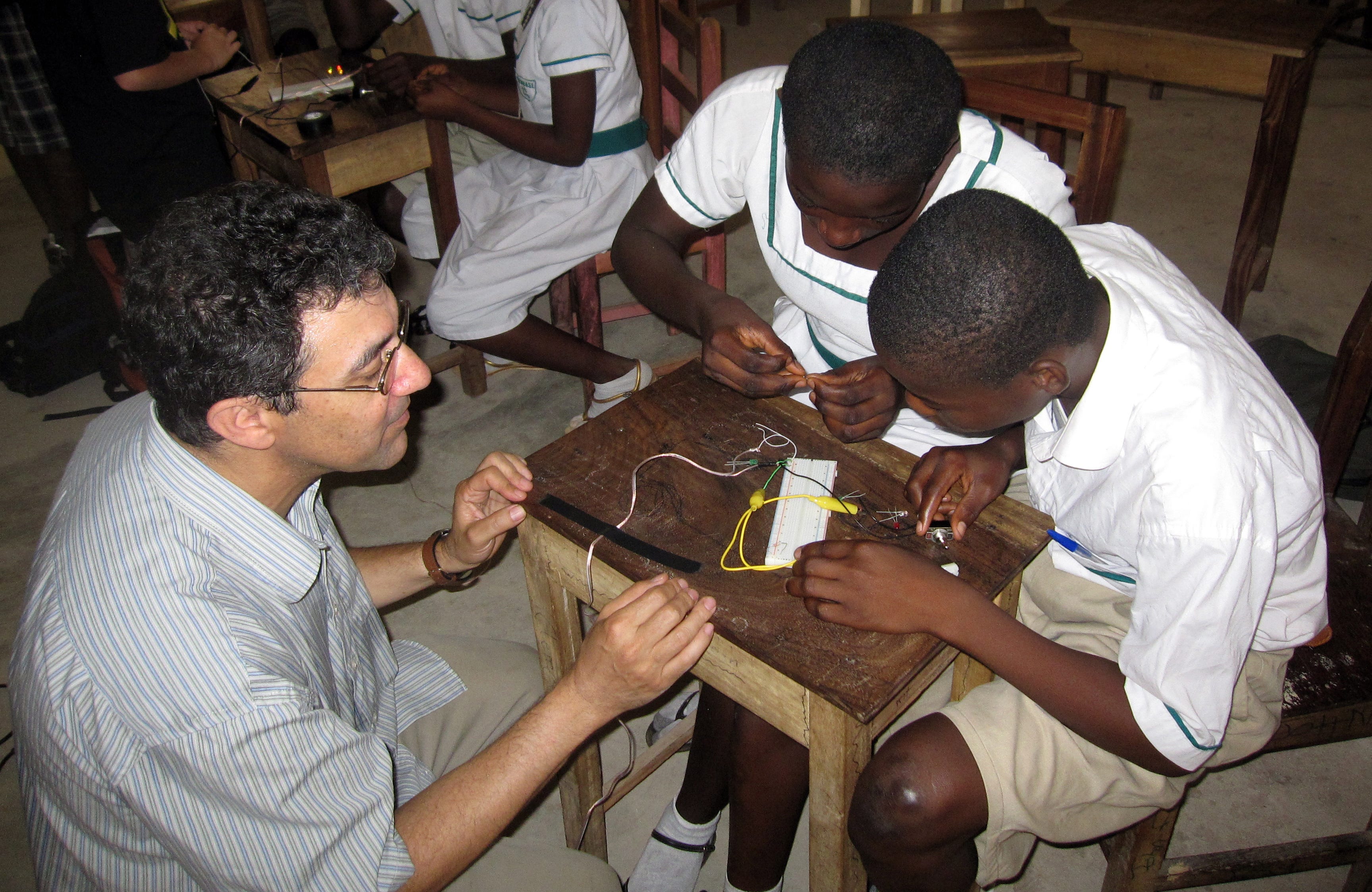
Special thanks to my friend Ron Eglash

I have been trying to write a love letter to the word justice. Not the courtroom word with powdered wigs and granite, but the older pulse under it (iūs, iūstitia) the sense that right-relation is not a verdict but a way things breathe together. As I lean into that breath, it carries me through time: the Latin roots naming what is due; the Old French whispering fairness; the English hardening into something we argue, tally, weaponize. But beneath the husk of punishment and prize, I keep hearing the sap move. Justice as metabolism. Justice as a river that knows how to curve back into life.
When I first read Ron Eglash, I felt that river turn. His African Fractals book taught me to see settlement as thought, geometry as kinship, pattern as memory. It was easy to imagine my friends’ accounts of Kaya in the Kenyan coast (self-similar enclosures that unfold like breath) suddenly not quaint, not ancient, but precise: recursive design as ethics. We began talking some years ago, but only recently have I sat with his work more fully. Today I want to introduce him as Director of the Center for Generative Justice, and to dwell for a moment with the clarity of his language. In “An Introduction to Generative Justice,” he writes that the aim is “the bottom-up circulation of unalienated value.”
> Unalienated value is value that remains in right-relation to its source, circulating with the consent, authorship, and benefit of the people and ecologies that generate it.
It is tempting to read justice as distribution: who gets what slice, how large a slice, how soon. But Eglash shows why redistribution after extraction keeps the wound open. If value is first torn from its living contexts (stripped from hands and soils and songs) and only then poured back from on high, the circuitry of harm remains intact. He offers a triad for healthy circulation: unalienated labor value instead of poverty, unalienated ecological value instead of pollution, unalienated expressive value instead of human rights violations.
Ron offers a definition: “The universal right to generate unalienated value and directly participate in its benefits; the rights of value generators to create their own conditions of production; and the rights of communities of value generation to nurture self-sustaining paths for its circulation.”
This, to me, is a watershed. It refuses the sterile debate between capitalism and communism, not by splitting the difference but by stepping off that line entirely. Generative justice, Eglash says, is orthogonal to that spectrum; its questions recur in both state and private ownership because they concern whether value remains with the people and ecologies who generate it, not who presides over its abstractions.
Ron’s conclusion is equally direct: value “can best serve human interests when it is allowed to remain in its unalienated state, and circulated by the human and non-human generators themselves.”
I read these pages while living in Kenya, where local practices keep teaching me what circulation means. In the Giriama traditions, my neighbors call one practice Mweria: heartful rotation of labor, neighbors arriving with hands and time when harvest or building or illness demands it. We call another Dhome: mindful gathering, elders convening the village to sense, speak, mend. When I map these practices onto commitment pooling - the networked economies we grow to make promises visible and repair redeemable … I see justice waking from abstraction. Instead of simply allocating capital like a conveyor belt, we endow it to pools that curate reciprocity. We seed a commons that remembers, forgives, and asks again. As credits and care pass between us, the value in circulation keeps moving and thickening like a living system; it composts our mistrust, it throws new roots. This, I realize, is what felt so fresh in the paper: that justice is not the story of a prize and punishment after the fact but of a metabolism guarded in real time.
Ron’s work refuses to live only on the page: he treats city, village, and workshop as laboratories where circulation can be designed, measured, and revised - building “artisanal futures” in Detroit with lasers, 3D printers, soil sensors, and community-owned platforms; prototyping Ubuntu-AI to return value and democratic control to African creatives; extending the experiment into living systems through an African Futurist Greenhouse of fractal architecture, rain harvesting, photovoltaics, and fair-pay local labor; even reimagining irrigation and charcoal via solar rain-catchment networks and pyrolysis that turns farm waste into biochar; and when the question is health and dignity, fabricating open-source condom vending machines so revenue and authorship remain local (see generativejustice.org).
He pairs this pragmatism with theory through Arduino: open hardware and code as a commons where peer sharing becomes power rather than charity. Without romanticizing, he names the messy couplings to mass production and the incomplete loops, yet keeps returning to the practical alchemy - when knowledge, tools, and authorship are shared, new lines of solidarity and design emerge; protest becomes platform; a public commons makes habitable space inside both socialist and capitalist regimes. And he warns against “green dictatorship,” the cooptation that praises material cycling while again subordinating labor and expression; generative justice moves between labor, ecosystems, and expressive forms, refusing to trade one for the others.
Why does this matter to me, a person living in Kenya for 17 years who is often called “white or mzungu,” born and raised in California, carrying so many threads - Irish indentured servants, Scottish Protestants, English Quakers, French Huguenots, German Jews, and likely many more? Because the river of value I grew up beside was diverted long before I arrived at its banks. I have benefited from the extraction of value from the global south - cheap labor and oil, the smooth path offered to my skin. Here in Kenya, some strangers sometimes presume my trustworthiness before they know me; they carry a history of light-skinned missionaries, donors, philanthropists. Others automatically distrust me for the same reasons. There are wounds in all these patterns.
A friend and I have been talking about compassion for the ancestors who were perpetrators of violence, slavery, colonialism. It has been important to us to articulate compassion not as sentimental absolution, but as disciplined medicine: presence, respect, co-creation, wise boundaries. The Bodhisattva/Brahmavihāra tradition says compassion is for all beings, including perpetrators, but never excuses harm; it prays for the end of the poisons even as it protects the harmed and interrupts abuse. The mantra is simple: may they be unable to continue harm; may they meet the causes to awaken and make amends; may all be safe. Solidarity first. Never again.
This is where generative justice returns as more than an idea. How can we forgive our ancestors (and ourselves) for benefits we did not earn and harms we did not, personally, commit? We can’t redeem the past with a single check or a single tear. We can, however, change what value does in our hands. I have come to see that the people around me holding great stores of money or assets or status are often safeguarding something toxic. To simply redistribute can be to recycle the same metabolic insult: moving the alienation laterally without healing the relation.
The monetary tradition of the Roman Moneta (money) feels like an invasive species - an elegant technology of abstraction that colonizes the living. But if we endow these holdings into networks of pooled commitments - if we compost privilege into a commons that curates care, reciprocity, and accountability - then the wealth is metabolized rather than merely moved. It is digested into soils of shared capacity. That is what Eglash’s closing vision affirms for me: nested loops of circulation, where yields increase “without introducing value alienation,” where technology and agroecology join, and where unalienated value remains with the communities and ecosystems that generate it.
In that light, Mweria (ala commitment poling) ceases to be nostalgia and becomes engineering: a protocol for balancing contribution over time, a choreography in which hands borrow one another’s rhythm until each field is tended. Dhome (Stewardship gatherings) becomes governance: a forum where observation and impact are named without blame, where make-goods become commitments, where repair is not a speech but a redeemable promise. Generative justice seems to be part of a ledger we keep in common, the tool shed endowment, the seed bank shares, the tutoring hours and transport stipends and care credits that move as steadily as breath. It is less exploitative than corporate scale and more self-sustaining than charity - not a utopia outside the world, but a practice of keeping value with its living sources within it.
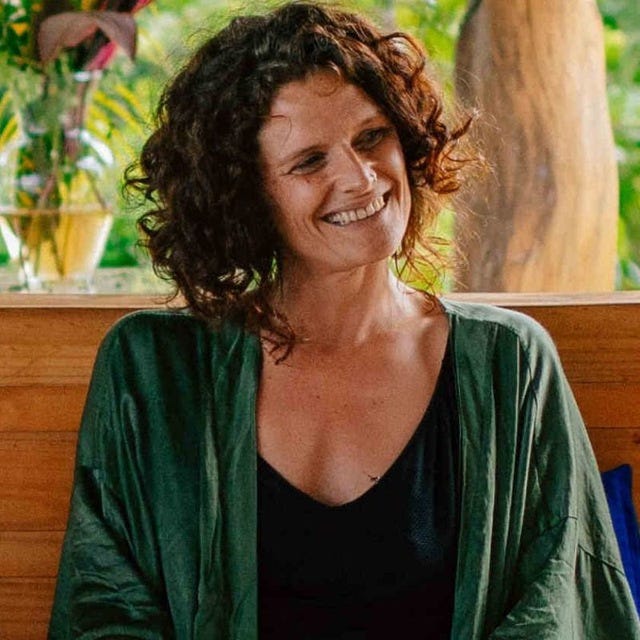
I think of my daughter, her Kenyan biological heritage braided with mine, her skin far darker than mine and yet inheriting some of my privilege all the same. Each day our friends and extended family try to pool whatever we’ve accumulated (money, access, attention) into the network and village that holds us. Aude does and explains this beautifuly.
Each day it feels less like giving away and more like coming home, re-rooting where we stand. Perhaps that is the oldest meaning of justice: not scales and swords, but the righting of relation; not the apportioning or redistribution of spoils, but the tending of a river until it can remember its own course again.
And if I borrow one more line from Ron, it is this quiet insistence I carry into our pools and circles: that we respect value “in its unalienated state,” that we allow it to be circulated by those (human and more-than-human) who generate it, that we build conditions where such circulation becomes the ordinary miracle of our days.
I read justice here as the Law of Harmony - that Life creates in order to maintain balance in a 'just' way - that way is rarely to be seen by one but felt by the many ... it holds an overseeing eye that offers circulation into oneness ... thank you
How beautiful. In my imagination and actions, I am cultivating the powerful idea of 'triggering an avalanche of kindness', you and your collaborators represent dancing snowflakes...... Humanity is at a tipping point, it will take global emergence of bottom-up kindness, recognition and actions that we're all interdependent with the energy of the universe and alignment requires the ability to recognize that legacy traumas are our common history. Yet it is through sharing and dignity for the complexity of living systems that holistic wellbeing which integrates yin and yang polarities of energy that universal wellbeing and sustainable futures can emerge through fractal mechanics. The integration of AI technology aligned with humanity is expressed in holarchic structures that have nested hierarchal integrated information flows that are reflected in your systems. Thank you for your efforts and inspiration!