
A Beard I No Longer Need
On Costly Signals, Stubbornness, Family, and Knowing When to Stop

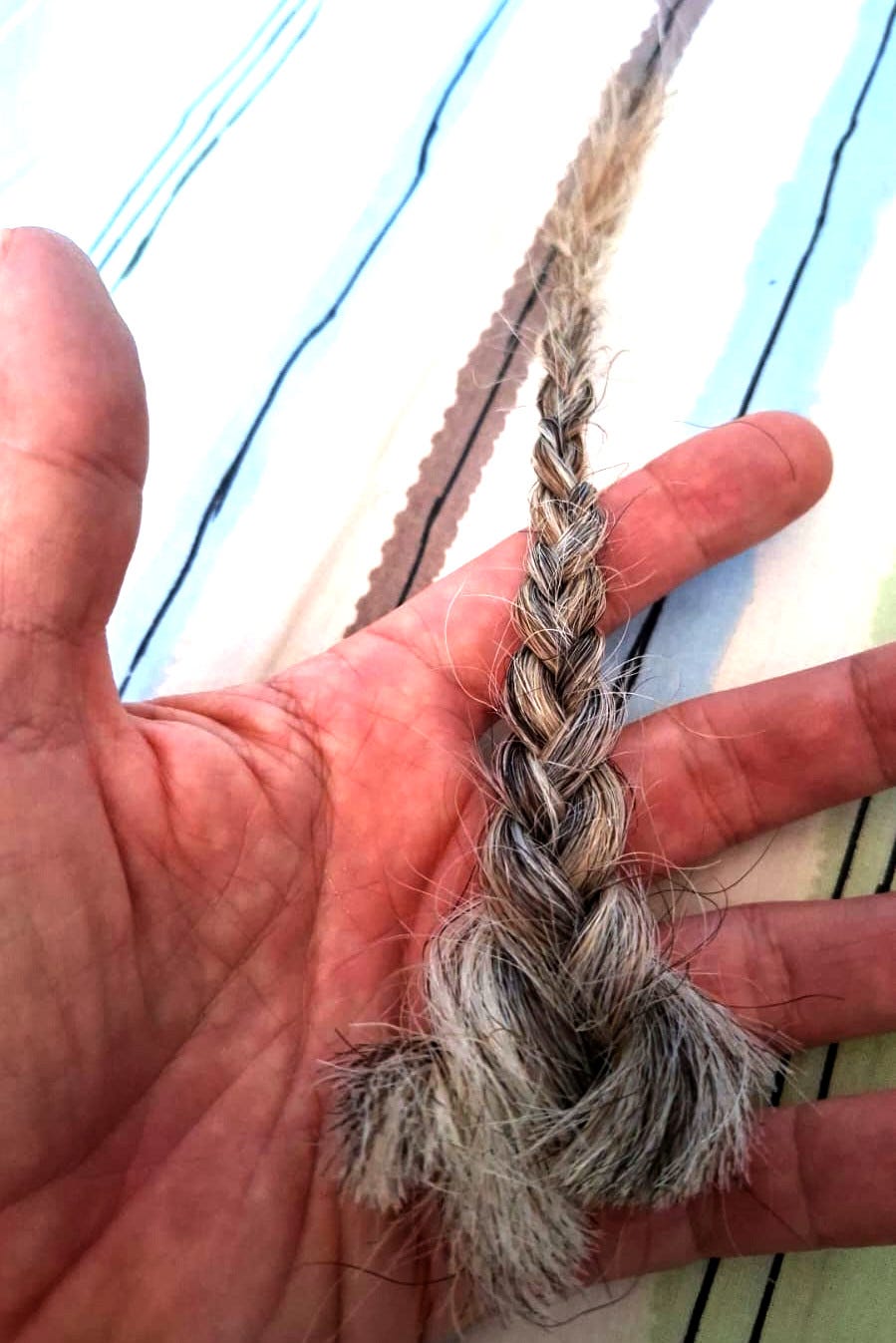
After three years, I have cut my beard. This is not a small thing for me.
For three years, I have been growing something (no trimming) that began as facial hair and gradually became an independent member of the household.
It had opinions.
It had dietary preferences.
It had, on more than one occasion, attempted to eat my dinner before I could.
I have found my own beard in my mouth while chewing. I have dipped it into drinks. Soup has required an entirely unnecessary level of planning. At a certain length, I could no longer consume a bowl of soup like an ordinary human being. I had to lean forward over the sink like some exhausted medieval alchemist drinking broth between experiments.
At night, the beard sometimes wrapped itself around my neck.
There is something philosophically interesting about waking up because part of your own body appears to be trying to assassinate you.
For three years, I endure this.
And, to be fair, so did everyone around me.
Some people admired the beard. Some tolerated it. Some had faces that make it perfectly clear they believe something had gone terribly wrong in my life.
Now it is gone.
Well, mostly gone.
And my lips are accessible again…. This is a surprisingly wonderful thing.
I can drink without calculating beard trajectory.
I can eat without accidentally flossing with myself.
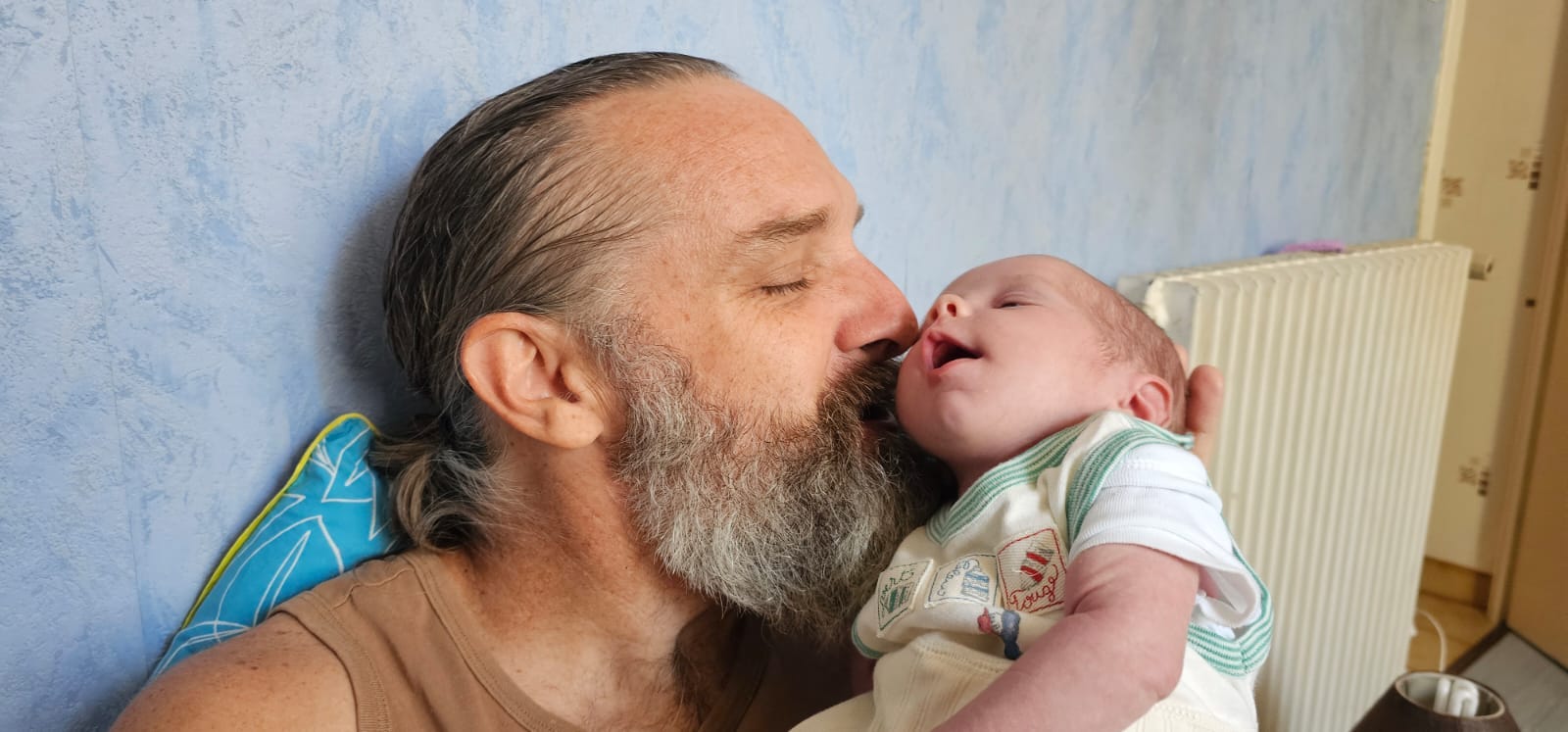
And, most importantly, I can kiss my daughter without first asking her to cross a small forest to reach me.
That alone may justify the decision.
Why Grow Something So Inconvenient?
(I’ll save my Gandalf, and dwarven warrior aspirations for later).
For much of these three years, I have amused myself by thinking about the long beard through the lens of evolutionary biology. Peacocks provide the famous example. Their extravagant tails are costly ornaments. They require resources, can hinder movement, and yet they persist.
One influential family of ideas in evolutionary biology concerns costly signalling: under some conditions, a trait may reliably reveal something about its bearer because producing or maintaining it is easier for some individuals than for others.
A version of this idea became famous as the “handicap principle”: perhaps an organism demonstrates quality by surviving despite an expensive disadvantage.
It is an elegant idea and also scientifically controversial … Biologists have spent decades arguing about when signals need to be costly, what makes them reliable, and whether cost itself is really doing the explanatory work.
So … I should probably not claim that my long beard scientifically proves my genetic superiority. That would be unfortunate. Especially now that I have cut off the evidence.
Still, as a personal mythology, I enjoy the thought.
My unruly beard said:
Look at this man.
He voluntarily spends twenty minutes extracting rice from his own face.
Imagine what else he can survive!
note: There is some actual beard research behind the joke. Facial hair can change how a man is perceived, particularly in apparent age, masculinity, and dominance.
Attraction is considerably messier. Sadly more beard does not simply mean more attractive, especially in my case.
So perhaps the beard is less: I am irresistibly beautiful.
And more: I appear capable of chairing a difficult village meeting.
Which, frankly, feels accurate.
I also used to joke that a very large beard might attract the particular sort of mate who thinks: Excellent. Something sturdy to grab during a fight.
I should stress that I possess no scientific evidence that people select partners according to beard tensile strength.
Some questions remain tragically underfunded.
The Strange Thing About Voluntary Discomfort
Underneath the jokes, there is something I find genuinely interesting about the experiment. For three years, I voluntarily carried a small inconvenience around with me every day. Nobody required this of me.
There is no medal. There is no finish line. There is no International Long Beard Challenge Committee waiting to certify that I have suffered enough.
And yet a choice repeated for long enough begins to acquire weight. At first I was simply growing a beard. Then I became a man with a long beard. Other people recognized me by it. Eventually, I recognized myself by it.
My temporary experiment became a habit, a social signal, an irritation, a story, an identity.
absurdly …
I begin serving the beard rather than the beard serving me.
I adjusted how I eat and how I sleep. I moved it out of the way.
I washed it. I untangled it.
I negotiated with it.
The fact that I had already done something for a long time began to feel like a reason to continue doing it.
so it’s interesting to me…
Sometimes endurance is admirable. But sometimes endurance is merely endurance. Past effort can acquire a strange authority over my present and future. I have already done this for years. I have already put up with the inconvenience. I have already become known for it….
Surely that means something. It does mean something….?
in any case .. it does not mean I must continue. Three years is not an argument for a fourth. Not every repeated choice is a commitment to repeat it forever. Sometimes the intelligent response to an unnecessary difficulty is not to prove that I can tolerate more of it.
Sometimes the intelligent response is to get the scissors.
There is a kind of freedom in saying: I have learned what I wanted to learn from this. I can stop now.
… let’s get down to brass tacks ...
My Wife Has Been More Patient Than the Science
There is one person who has had the closest possible relationship with this beard: my wife, Aude. She has been putting up with not properly seeing my lips since we met.
I should be clear: she certainly did not stick around for the beard.
If anything, the length of beard has been an ongoing test of affection, patience, and her willingness to accept that the man she loves occasionally chooses to make ordinary activities unnecessarily difficult.
So while shaving has not exactly saved our marriage, it has probably removed one completely avoidable obstacle from it.
That feels like progress.
And now, for the first time in a long while, she can actually see the person speaking to her without a curtain of hair moving around his mouth.
There are grand romantic gestures.
There are flowers. … There are anniversaries.
And apparently there is also:
I have made my lips available again.
My Mother-in-Law Delivers the Final Peer Review
The most concise evaluation of the entire experiment comes from Aude’s mother. When she saw me without the enormous beard, she said:
“Tu étais beau avant, mais pas en apparence.”
Approximately:
“You were beautiful before, but not in appearance.”
This may be the finest mother-in-law sentence ever constructed. It manages simultaneously to express affection, reassurance, criticism, and three years of suppressed relief.
Apparently my inner beauty has survived intact.
My outer beauty has simply been released from captivity.
Everyone seems quite happy.
I am happy too.
There is something strange about seeing my own face again.
The beard has hidden parts of it for so long that shaving feels less like changing my appearance than excavating an archaeological site.
Ah.
There is my chin.
I remember him.
And there are my lips.
Welcome back, gentlemen.
Knowing When to Stop
I do not regret the beard. I rather like that I did something ridiculous long enough to understand it from the inside.
I learned something about inconvenience, identity, persistence, signalling, vanity, patience, habit, and the human tendency to turn almost anything into a story about ourselves.
Perhaps the beard communicated toughness, age, masculinity, stubbornness and commitment.
Perhaps it mostly communicated that I had misplaced my razor.
Science is allowed to remain undecided.
I am also allowed to change.
The beard has done whatever work I needed it to do. I do not need three years of endurance to become an argument for a fourth.
Tonight, I intend to celebrate this modest revelation with an equally modest luxury.
A bowl of soup.
Sitting upright!
congratulations! 🥳
best MIL line ever indeed.
I’ve been pondering a fair bit how we become attached to what is familiar and that can be self perpetuating even when maladaptive
for years i’ve said “we become addicted to our pain”
sure it hurts, but it’s so FAMILIAR
I’ve got a friend with a biblical beard and in his case it’s pretty clear to me that part of it is wanting to challenge people…oh if you can get past the beard, kind of thing
my current facial hair journey is a mustache.
oh the kids can wear them unironically, they weren’t alive in the 70s
but for me?
the first time i took it out it was in no small part because it made me uncomfortable
now I’m enjoying it because it’s a disguise
“oh this isn’t the real me, who will I be when I’m wearing it?”
time will tell
enjoy your new freedom